Originally published on PRWeekIn.com
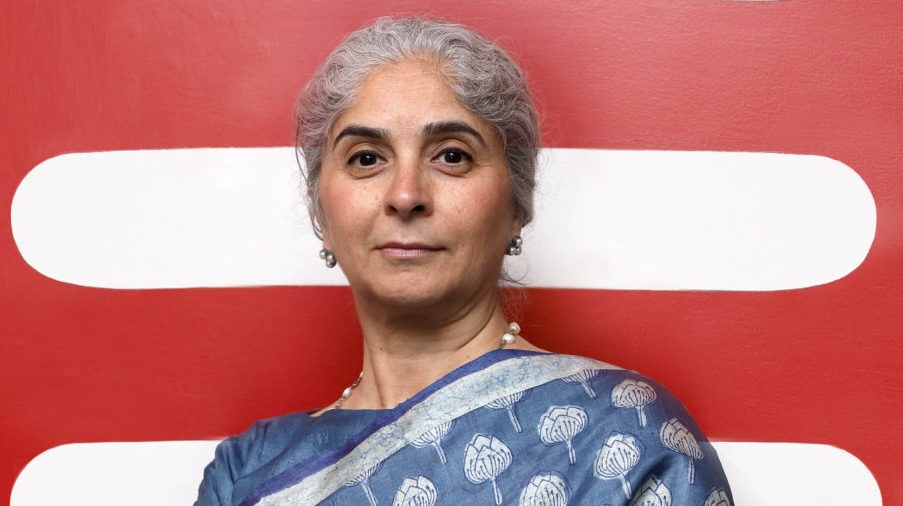
India’s public relations industry has evolved far beyond its traditional role of securing media coverage. Today, communications is expected to shape business strategy, build stakeholder trust and navigate an increasingly fragmented information landscape. As PR Pundit Havas Red marks 28 years, founder and CEO Archana Jain believes the profession is entering another defining phase, driven by artificial intelligence (AI), creator-led influence and rising expectations around accountability and impact. Yet amid that change, she argues, one principle has remained constant.
“The golden currency has always been credibility,” Jain says. “Reputation is built consistently over time through actions. Trust is never built in one defining moment.”
For Jain, credibility is not simply a communications objective but the foundation upon which every lasting reputation is built. While technology continues to reshape how organisations engage with stakeholders, she believes trust remains the profession’s most enduring asset. This perspective matches the ground realities of the Indian market.
The PRCAI SPRINT 2026 report shows that an overwhelming 96% of Indian executives now directly link PR to building critical investor confidence and customer loyalty. Furthermore, as social divides deepen, the 2026 Edelman Trust Barometer highlights a widening 16-point income-based trust gap in India, proving that local businesses must work harder than ever to serve as unifying trust brokers among polarised stakeholder expectations.
If credibility remains constant, the way it is earned has fundamentally changed.
Jain argues that communications has moved beyond a one-way model where brands controlled the narrative. Today, influence is shared across consumers, creators, employees and online communities that actively shape public perception.
“In the old days, it was a one-way street,” she says. “Today, narratives are co-created.” That shift demands consistency between what organisations say and what they do. Every customer interaction, leadership decision and corporate action contributes to reputation, leaving little room for a disconnect between messaging and behaviour.
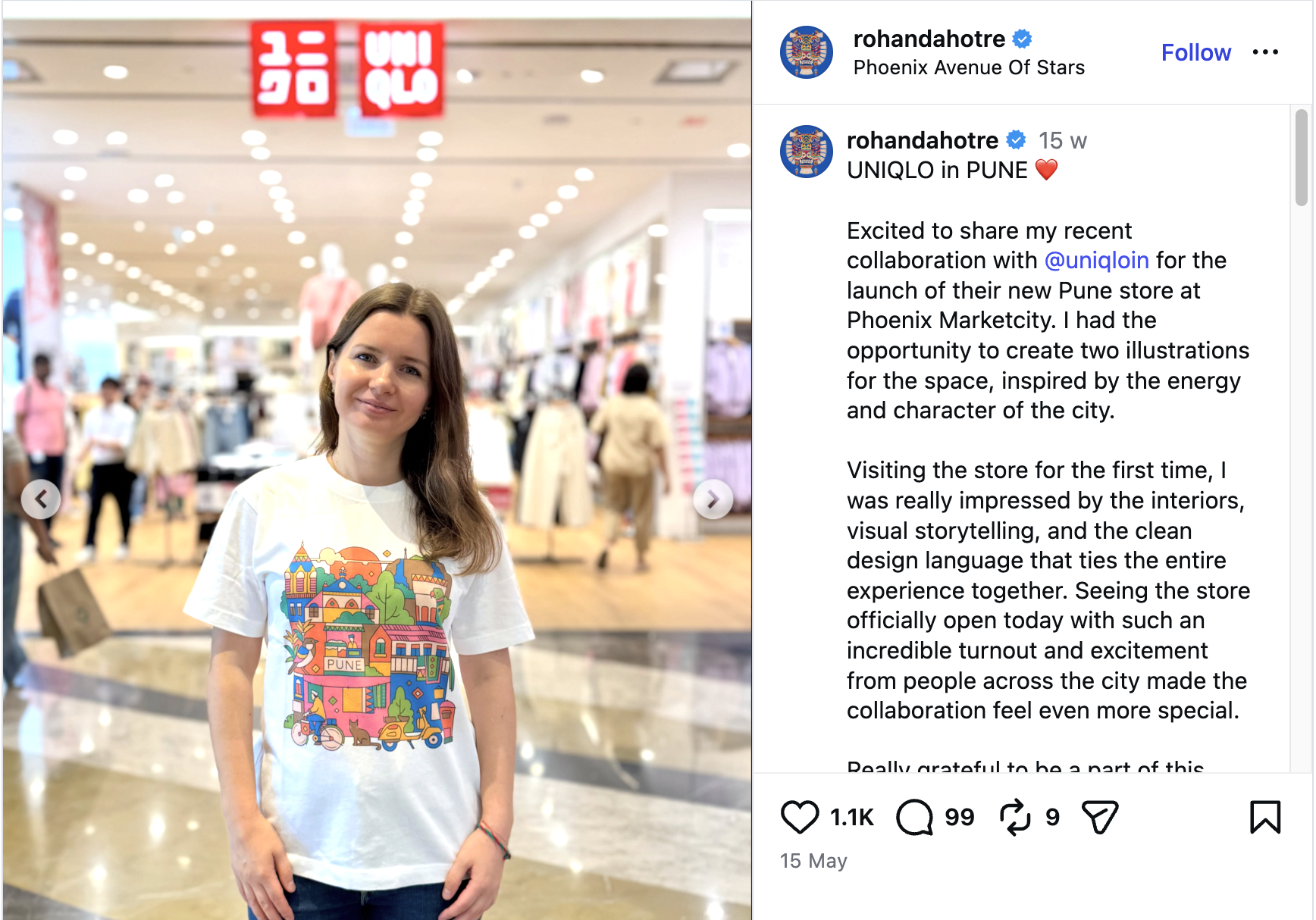
Jain points to Uniqlo as an example of a brand that has successfully embedded itself within local communities rather than relying solely on product-led storytelling. Through neighbourhood-focused initiatives and experiences that reflect local culture, the brand has strengthened its relevance beyond retail. She also cites Forrest Essentials whose expansion has remained rooted in its luxury Ayurveda positioning. For Jain, both examples demonstrate that communications succeeds when it amplifies an authentic brand identity instead of attempting to manufacture one.
“People experience brands today. They do not simply consume advertising,” she says. “Communications has to reflect that lived experience.”
The rise of the creator economy has accelerated this shift.
For Jain, however, creators are not simply another communications channel but an extension of integrated public relations. “Public relations is about addressing multiple stakeholders in formats they understand,” she says. “If my audience is GenZ, I need to understand how GenZ consumes information.”
With nearly a quarter of India’s working population now comprising Gen Z, she believes brands must meet audiences where they already consume information.
Communications today extends beyond earned media to encompass shared, owned and paid platforms, making creator partnerships a strategic component of integrated campaigns rather than a tactical add-on.
“You have to live in the creator ecosystem and work alongside those communities,” she says. Drawing on PR Pundit Havas Red’s experience of working with creators for over 15 years, Jain argues that successful collaborations depend less on follower counts than on authenticity and subject-matter relevance. “You cannot simply choose someone because they have millions of followers. If they do not speak authentically about the subject, the effort loses credibility.”
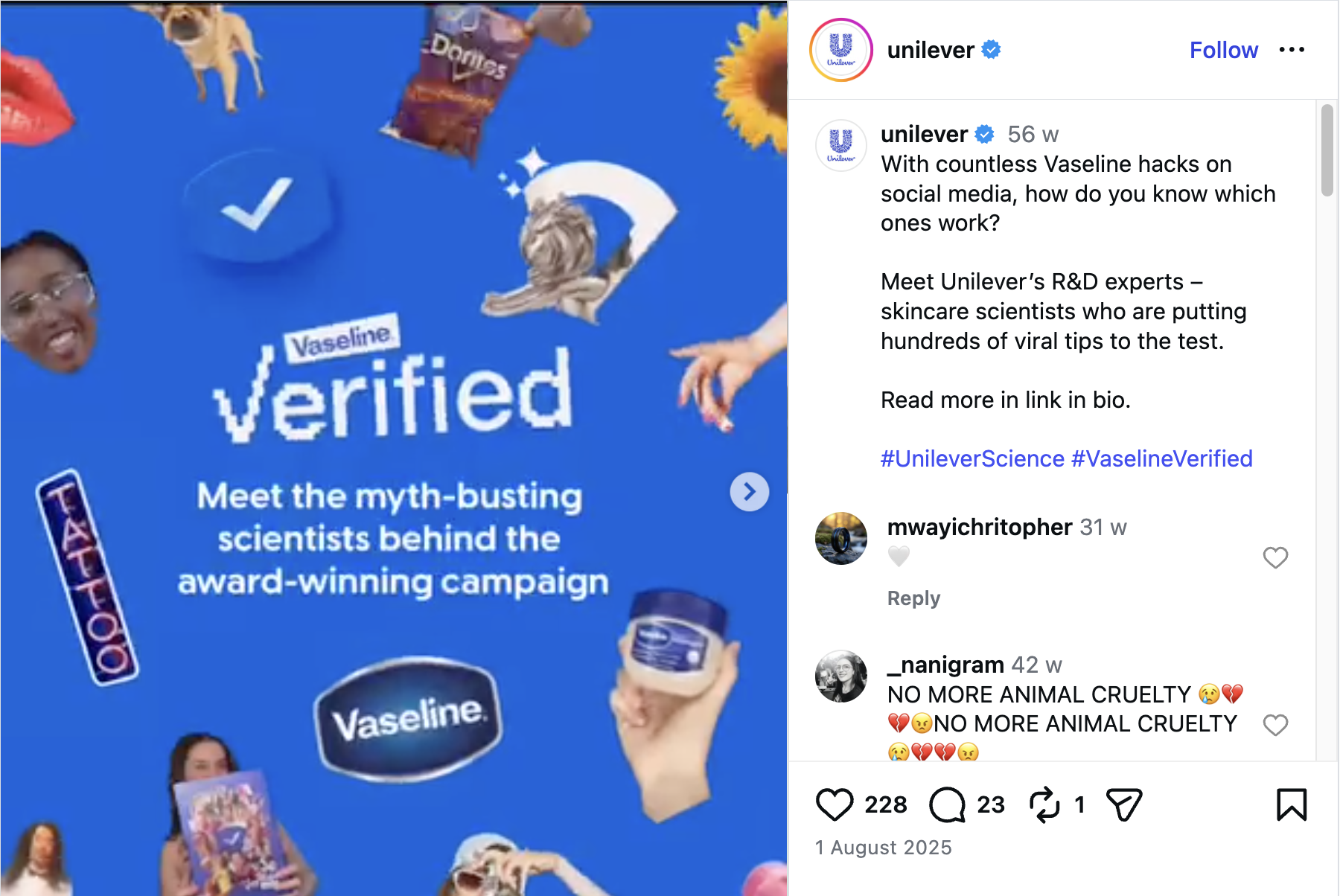
She points to Vaseline Verified, recognised at Cannes Lions 2025, as an example of a brand participating meaningfully within creator communities. Rather than promoting products, the campaign responded to misleading skincare advice circulating online by verifying claims with expert-backed information, positioning the brand as a trusted participant in an existing conversation. For Jain, creator expertise is no longer optional. As brands deepen their engagement with digital communities, agencies require specialised capabilities to understand platform behaviour, community dynamics and emerging formats.
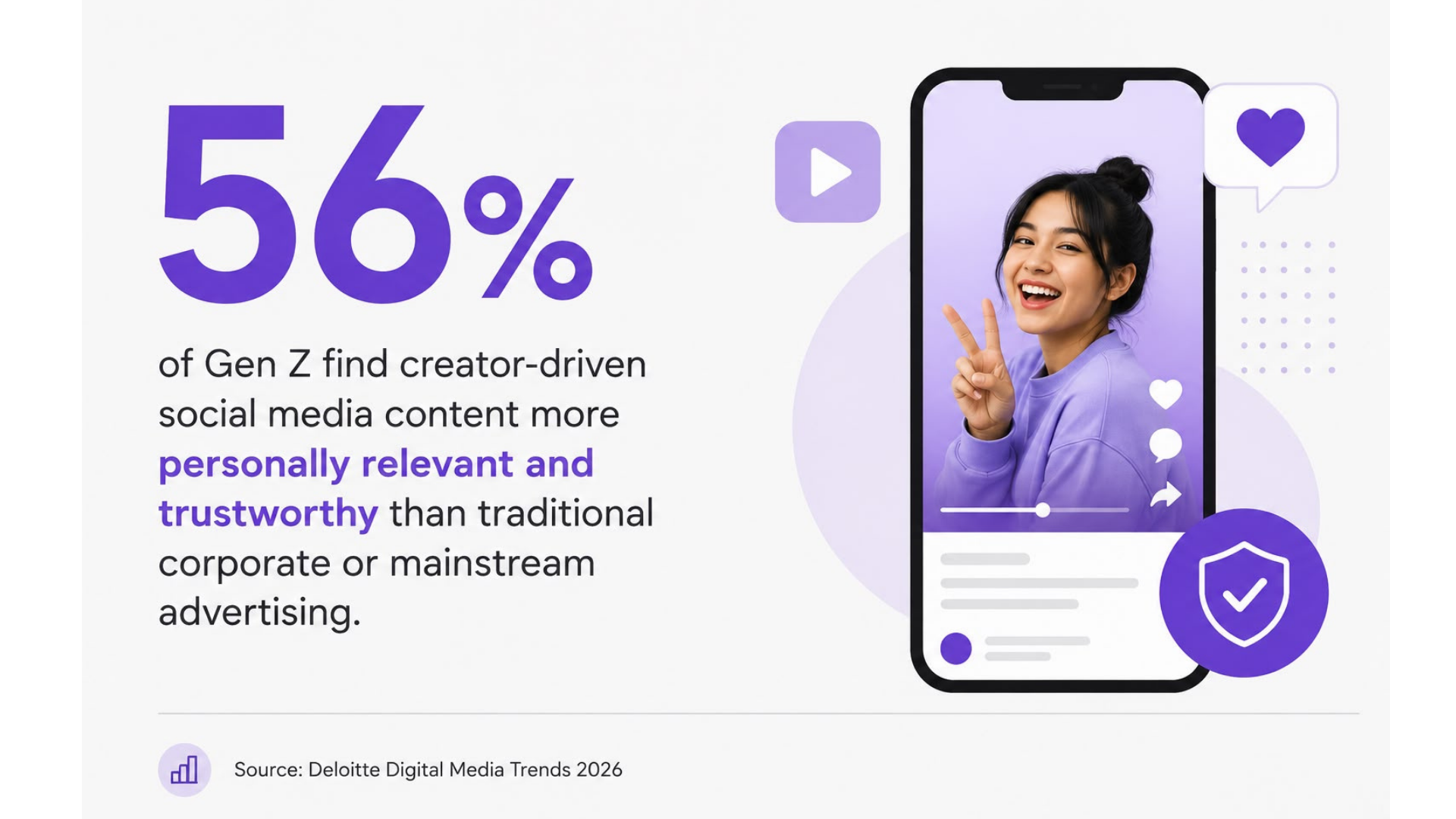
This specialized understanding is crucial given how rigidly young consumers filter corporate messaging. This uncompromising stance on integrity extends directly to their media behavior; Deloitte’s Digital Media Trends study reveals that 56% of Gen Z consumers find creator-driven social media content significantly more personally relevant and trustworthy than traditional corporate or mainstream advertising channels.
That expectation extends beyond creators to corporate purpose itself.
Consumers increasingly expect organisations to demonstrate what they stand for through visible action rather than carefully crafted messaging alone. “In the past, communication built aspiration,” Jain says. “Today, audiences want brands to be accountable.” For Jain, purpose-led communications can no longer rely on intent alone.
“Purpose without proof is the fastest way to lose trust.”
She points to The Whole Truth as a brand whose commitment to transparency has become a competitive advantage because its messaging aligns with its products and business practices. For communications professionals, the challenge is no longer articulating purpose but ensuring organisations can substantiate it through consistent action.
That expectation, Jain argues, also raises a fundamental question for the communications profession itself: if brands are increasingly expected to demonstrate impact beyond promises, should agencies not be held to the same standard?
If brands are expected to prove purpose, Jain believes agencies must also demonstrate the value they create beyond media visibility. Communications, she argues, earns its credibility when it reflects authentic business behaviour rather than simply telling compelling stories.
For years, communications professionals have argued that their work should be evaluated by business outcomes rather than media outputs. Jain believes the industry must now apply that principle to itself.
“The shift to outcomes is essential,” she says. “If we continue showing volume instead of value, then we have to question ourselves.” For Jain, agencies must move beyond coverage reports and demonstrate how communications influences stakeholder behaviour, reputation and business performance.
“We need to stop measuring activities and start measuring impact.”
She believes that evolution is already taking shape. Creator campaigns, for instance, provide measurable indicators such as swipe-throughs, conversions and audience engagement, allowing brands to assess communications effectiveness beyond impressions alone.
The same thinking is now extending to AI-powered search. As consumers increasingly turn to platforms such as ChatGPT, Gemini and Perplexity to research brands, earned media is beginning to shape how organisations are represented within large language models.
“People are searching for products on ChatGPT and other AI platforms. Where are they pulling the information from? Earned media.”
PR Pundit Havas Red has already begun evaluating whether client stories are surfacing within AI-generated responses. “We’ve started checking whether stories are actually being populated on large language models,” Jain says. “We need to understand how effective we are at generative engine optimisation.” For Jain, the future of communications measurement lies not in documenting outputs but in demonstrating how credible third-party content influences discovery, trust and business outcomes.
This proactive auditing is becoming a survival requirement as consumer behavior shifts toward zero-click AI platforms. According to research from Bain & Company, an astonishing 80% of search users now regularly rely on AI summaries, causing 60% of searches to conclude without a single click to an external website. Because AI models pull heavily from authoritative third-party coverage to formulate these responses, Gartner forecasts that this mass pivot to large language models will drive a 2x increase in PR and earned media budgets. These metrics prove that managing visibility within AI summaries is no longer just a technical SEO experiment, but a vital objective for corporate reputation and business performance.
Jain describes artificial intelligence as an accelerator rather than a substitute for strategic thinking.
“AI is a whiteboard for me,” she says. “It starts with understanding how to prompt it and then reviewing what it gives back.” She believes the quality of AI-generated outputs depends largely on the context and judgement provided by communications professionals.
“If you give it the right context and guardrails, it can generate great concepts. But an experienced eye still needs to evaluate whether those ideas are nuanced.” To encourage responsible adoption, employees at Havas complete AI certification through Havas University before gaining access to AI tools.
Equally important, Jain cautions against treating AI as an unquestioned source of truth. “People just copy and paste without reading it,” she says. “You can’t do that.”
For Jain, AI will undoubtedly transform workflows, but strategic judgement, creativity and conviction remain uniquely human. “AI will accelerate thinking, not replace it. The human mind builds conviction.”
Technology may be reshaping communications, but Jain believes one of the industry’s biggest challenges remains commercial.
“Younger professionals want to achieve a lot more in a faster time scale, and I do not blame them,” she says. “But the industry has been constrained by margins for a long time.”
As agencies are increasingly expected to provide strategic business counsel, she argues that remuneration has not kept pace with those expectations. “If we could attract and retain talent with better remuneration, we would be a much larger industry.”
For Jain, the industry’s talent challenge is ultimately an economic one. Until agencies are appropriately valued for strategic communications, attracting and retaining skilled professionals will remain difficult.
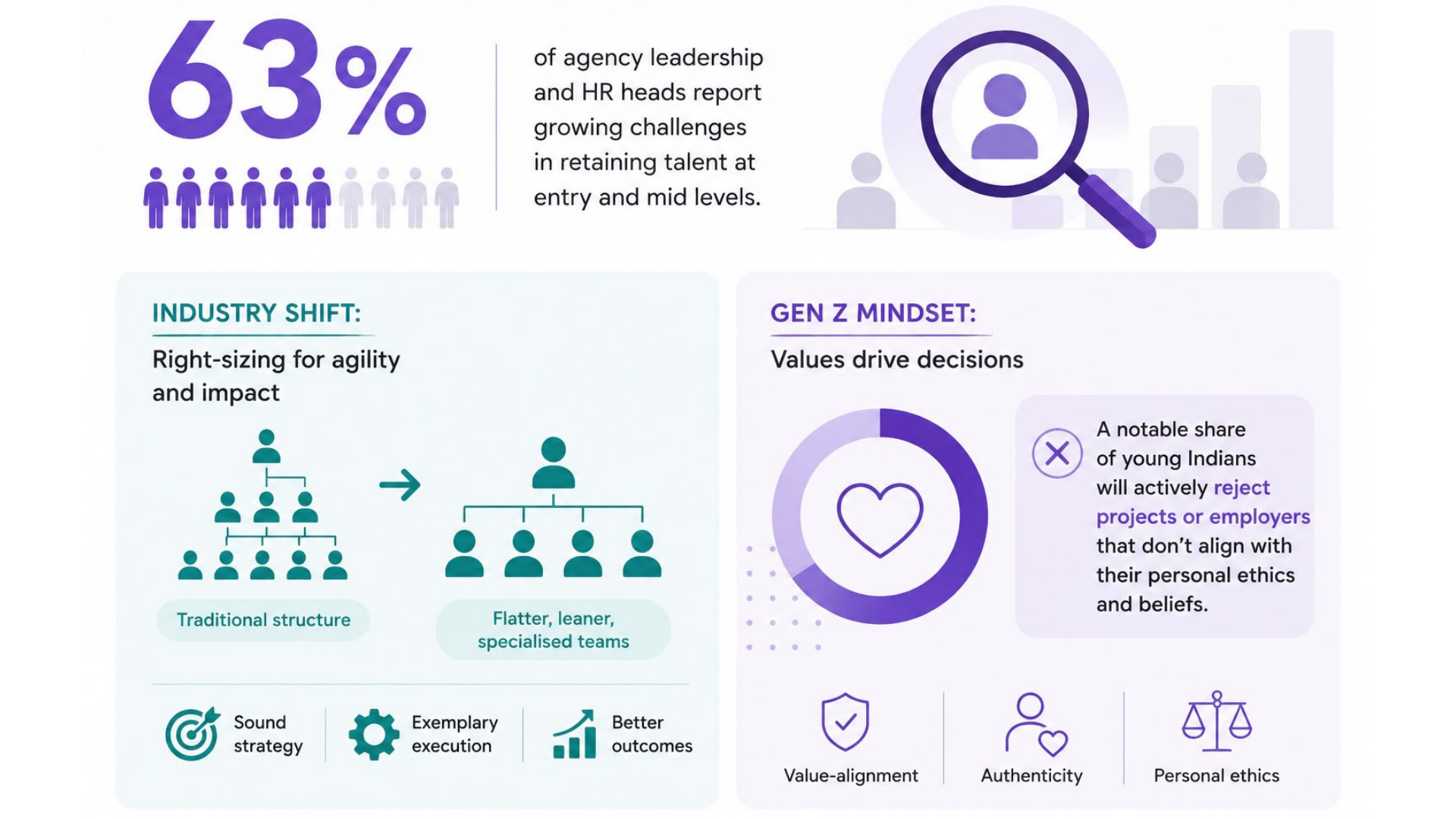
This viewpoint perfectly captures the core operational stresses facing Indian firms today. According to data from the newly unveiled PRCAI SPRINT 2026 report, an overwhelming 63% of agency leadership and HR heads report growing challenges in retaining talent, specifically at the critical entry and mid levels. To combat this friction, the study highlights a noticeable industry shift toward right-sizing and building flatter, leaner, and more specialised team structures to balance sound strategy with exemplary execution. According to Deloitte’s 2026 Gen Z and Millennial Survey for India, value-alignment and authenticity dictate how young Indians engage, with a notable share stating they will actively reject projects or potential employers solely based on their personal ethics and beliefs.
These metrics confirm that the talent bottleneck cannot be solved by workplace perks alone; rather, it demands a fundamental structural shift in how clients value, contract, and remunerate strategic public relations counsel.
Looking ahead, Jain believes Indian communications has an opportunity to move further up the value chain by adopting globally relevant frameworks, demonstrating greater sophistication and strengthening how the profession measures its impact.
“We need to throw up a lot of globally relevant frameworks,” she says. “Our work has to move into the realm of making an impact driven by insights. I would love to see an industry where PR is actually creating culture, not just writing about it.”
Nearly three decades after founding PR Pundit Havas Red, Jain’s reflections point to a profession that has evolved far beyond media relations. Credibility remains communications’ defining currency. AI, creator ecosystems and new approaches to measurement simply offer different ways of earning it.
The future of Indian PR, she argues, will be defined not by the volume of coverage it generates, but by its ability to shape trust, influence behaviour and create culture.
Take the next step and reach out today.